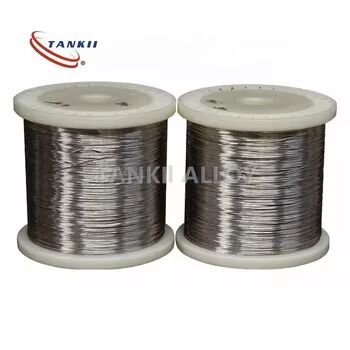
Szczegóły Produktu
Miejsce pochodzenia: Chiny
Nazwa handlowa: Tankii
Orzecznictwo: ISO9001
Numer modelu: Typ K
Dokument: Tankii Alloy Catalog.pdf
Warunki płatności i wysyłki
Minimalne zamówienie: 10 kg
Cena: 40-60USD/Kg
Szczegóły pakowania: Sprawa
Czas dostawy: 10-15 dni
Zasady płatności: L/C, D/A, D/P, T/T, Western Union
Możliwość Supply: 5000 kg/miesiąc
Dia: |
0,05 ~ 12 mm |
Powierzchnia: |
Jasny/utleniony drut termopary |
Stopień: |
I/II/III |
Wytrzymałość na rozciąganie: |
≥390 |
Przedmiot: |
Drut termopary typu K o średnicy 0,2 mm |
Kształt drutu: |
okrągły/płaski |
Dia: |
0,05 ~ 12 mm |
Powierzchnia: |
Jasny/utleniony drut termopary |
Stopień: |
I/II/III |
Wytrzymałość na rozciąganie: |
≥390 |
Przedmiot: |
Drut termopary typu K o średnicy 0,2 mm |
Kształt drutu: |
okrągły/płaski |
Diameter 0.2mm type K Thermocouple Wire T C wire KP KN (Type K / N)
Thermocouple wire allows temperatures to be measured electronically.
A typical thermocouple construction consists of a pair of dissimilar metals that are electrically joined together at the sensing point and connected to a voltage measuring instrument at the other end.
When one junction is hotter than the other, a thermal "electromotive" force (in millivolts) is produced that is roughly proportional to the difference in temperature between the hot and cold junctions.
NiCr-Ni (Type K) thermocouple wire finds the widest use in all basemetal thermocouple, at temperature above 500 °C.
Type K thermocouple wire has strong resistance to oxidation than other base metal thermocouples. It has high EMF against Platinum 67, excellent temperature accuracy, sensitivity and stability, with a low cost. It is recommended for oxidizing or inert atmospheres, but cannot be used directly in the following cases:
(1) Alternatively oxidizing and reducing atmosphere.
(2) Atmosphere with sulphur gases.
(3) Long time in vacuum.
(4) Low oxidizing atmosphere such as hydrogen and carbon monoxide atmosphere.
Detailed Parameter
Application of thermocouple wire:
1. Heating - Gas burners for ovens
2. Cooling - Freezers
3. Engine protection - Temperatures and surface temperatures
4. High temperature control - Iron casting
![]()
![]()
![]()
![]()
![]()
![]()